

COP28: Navigating the world’s biggest challenge
On my flight back from Dubai last week, I found myself next to Ian.
Ian, I assumed, was a fellow traveller heading home from the COP28 Climate Conference, so would be up for some shared sensemaking around the way forward for Scotland and the world.
My assumptions were wide of the mark. Ian had, in fact, been in Oman for work in the oil and gas sector.
“There’s simply not enough minerals and silver to provide enough battery storage”, he said. “Renewables like solar and wind need storage, and we have no way to do that at scale.”
Hot rocks and graphite bricks
I changed tack, sharing a story about a school in Norway that collects energy during the summer months, using solar to heat the rock beneath it to nearly 50 degrees, which in turn provides enough energy to power the school through winter. Not an ounce of lithium in sight, just an alternative way to store energy.
And then there’s the Antora Energy pilot. Graphite bricks which can be heated up to 1,500℃ from wind and sun energy. The graphite glows like the Sun (you’d need glasses to be anywhere near it) and electricity is produced back via photovoltaic panels capturing light from the block array. Current results indicate it will have an efficiency of 60% … or something like that.
I could tell Ian was beginning to lose interest again. I changed the subject to European history.
A third energy transition
This isn’t the first energy transition humanity has faced. In the early 1700s, after 2,000 years of deforestation – and killing most of the whales in the North Atlantic – European economies which had been based on burning wood and whale fat faced an energy crisis.
It was the discovery of coal that saved us. England and Scotland were the first two economies to go through an energy transition from wood to coal, literally powering the Industrial Revolution. But coal was dirty, not energy-dense, hard to mine and tricky to transport.
Oil and gas were the answer. From 1945 to 1960, our energy infrastructure completely changed again, leading to the construction of terminals, pipelines, refineries and storage and distribution facilities. In just 15 short years, enough was done to let ordinary people take advantage of this enormous energy transition.
The optimist would say it’s a reminder that big systems can change very fast. But though solar and wind are picking up, our fossil fuel dependence isn’t declining nearly quickly enough.
Rystad Energy, a leading Norwegian data consultancy, predicts it will be some time yet before solar and wind can surpass fossil fuels. Even if the work is done to keep temperature increase below 2℃, to avoid serious energy disruption we’d still need to drill between 500,000 and 1.4m new oil wells. That’s pretty worrying when we’re in a race to transition while the climate is declining.
At this point, Ian put his headphones on and settled into John Wick 4. But, in the days since COP28, I’ve been continuing to think about what I heard and what we can do.
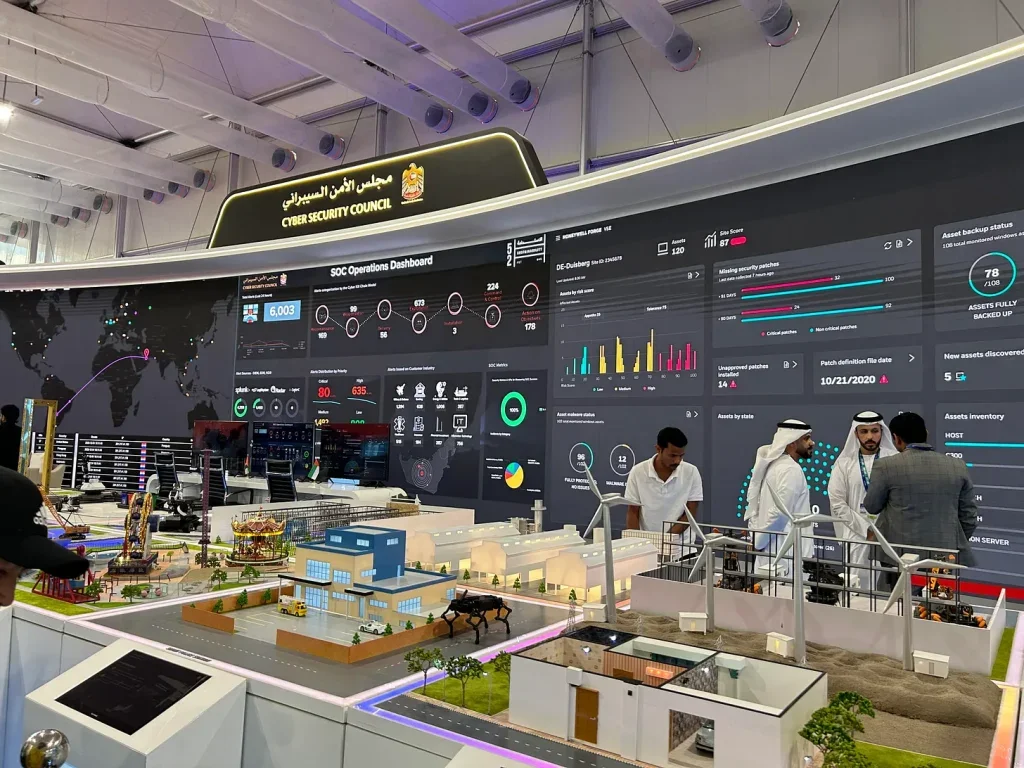
The cybersecurity pavilion
Finding new perspectives
COP was established in 1992 by the United Nations to monitor climate change, with the goal of limiting average global temperature increases.
Signed by 196 nations in 2015, the Paris Agreement was the first legally-binding requirement for all nations to work together to stay below 1.5℃ of global warming and cut emissions by half by 2030. Now half the time is gone and the world is miles off target, so the regular COP meetings are more important than ever.
COP28 was the largest event to date, with 70,000 delegates attending, from diplomats, policy makers and scientists, to representatives from business and finance.
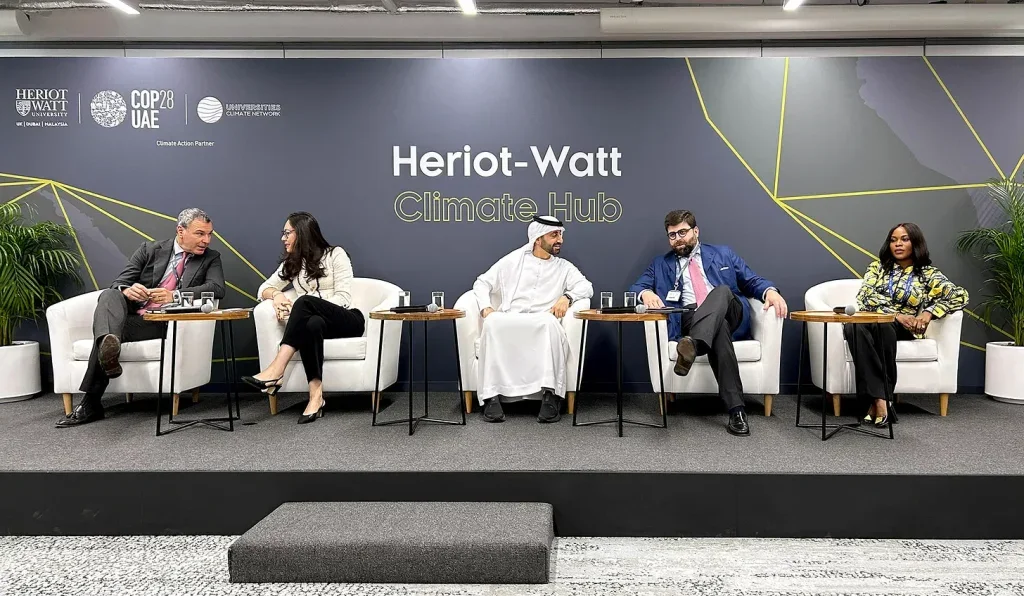
From a macro perspective, one conversation at COP stood out. Heriot Watt University had created a climate hub running throughout the 12 days of COP. It was here that we heard Adam Dixon, chair of Panmure House here in Edinburgh, and Tom Steyer – a former presidential candidate, and head of Galvanise Climate Solutions – highlight three topics that aren’t getting enough attention:
How can we use 21st century solutions for this 21st century problem? We need real-time data about what is going on so everyone and anyone can make better decisions.
Secondly, COP goals are about net zero, which requires lots of sequestration (i.e. carbon capture and storage) per year. So when will we talk about how critical nature-based sequestration is? Natural solutions scale and are much cheaper than man-made alternatives, with heaps of positive side-effects. The only challenge is agreeing how to measure how much carbon is being removed to prevent corporations or countries overstating the impact of nature-based schemes.
Thirdly, there’s a people problem. Most of us expect to experience climate change through direct impacts like floods, droughts and wildfires. While these are true, the way that climate change will really hit home is through human migration. The UN estimates at least 20 million people will be forcibly displaced by climate change, challenging national sovereignty and people’s sense of identity. Given the state of current political narratives around migration, this is a huge challenge for the world, and one that seems likely to get worse if we don’t take sufficient action.

Nile’s CEO, Dag Lee and I enjoying breakfast at COP28 with Mercedes Maroto-Valer, Director of the UK Industrial Decarbonisation Research and Innovation Centre – and winner of this year’s Net Zero Industries Award
What comes next?
This is a world challenge, and something we’re all going to experience at different levels. Some can have more agency on the challenge than others – policy makers, financiers, scientists and engineers. But we all have a responsibility to be informed and take action where we can.
At COP, in a very short space of time, I experienced multiple perspectives and gained real insight from many people who are living and breathing the climate challenge.
More importantly, on Wednesday morning, the international community finally agreed wording that calls for a transition away from fossil fuels in “a just, orderly and equitable manner, accelerating action in this critical decade”.
The combined impact of the energy transition we are now bound to undertake – and the damage already done to the climate – mean the coming years will be ones of continuous and significant change.
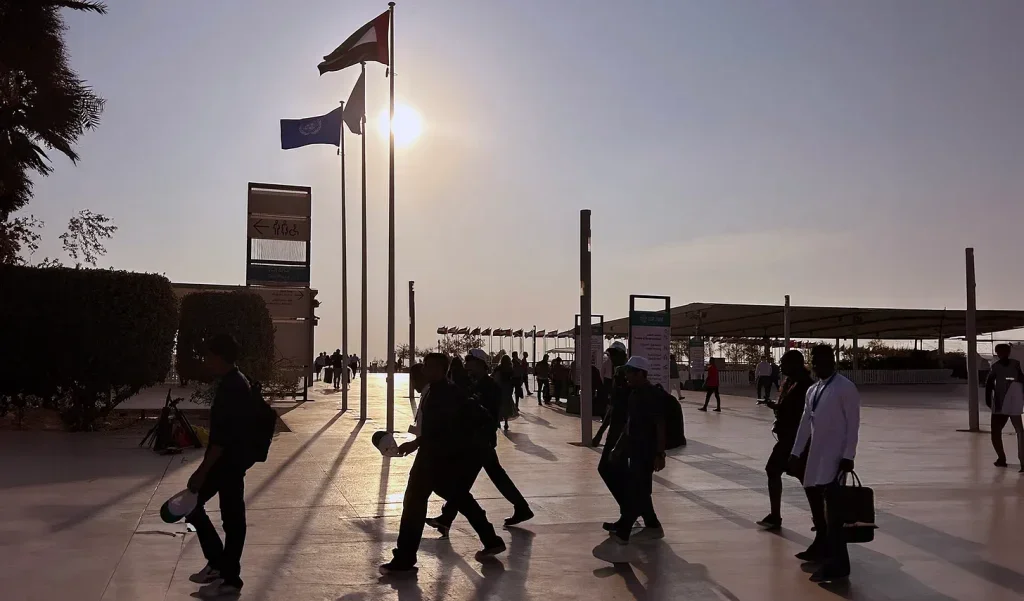
The sun sets on COP28
As I returned from COP28, my key takeaway was a sense of cautious optimism. The advances and commitments made show momentum, but the scale of change required remains daunting. We need fresh thinking combined with technology to rise to this 21st century crisis.
I sensed the same ethos that we put into our work at Nile present in the discussions at COP: taking diverse views into account, finding common purpose despite disagreement, and enabling communities to take ownership over solutions.
So while we aren’t climate specialists, I believe Nile’s skills in human-centred design, navigating complexity, and partnering across sectors can all help push things forward.
Our team is committed to doing our part, and I hope you’ll join us on the journey.
